- The High Performance Playbook
- Posts
- If You Struggle with Chronic Stress, Read This:
If You Struggle with Chronic Stress, Read This:
The hormone quietly wrecking your health, and it's not the one you think.

Austin Wright
March 31st, 2026 • Est. Reading Time: 4 minutes
Hey ,
I want to talk about something that gets dismissed constantly, and it's costing people years of their health.
Stress.
Not the dramatic, crisis-level kind. The quiet, persistent, background hum of modern life kind.
The kind that doesn't feel serious because it's become so normal you've stopped noticing it.
That kind of stress has a name inside your body. It's called cortisol. And if it's been running chronically elevated (which for most driven, high-output people, it has), it is doing damage that goes far beyond feeling anxious or burned out.
This isn't a mental health conversation. It's a metabolic one.
The Cortisol Problem Nobody Is Taking Seriously
Let's start with what cortisol actually is, because most people have a vague, negative association with the word without really understanding what it does.
Cortisol is your primary stress hormone.
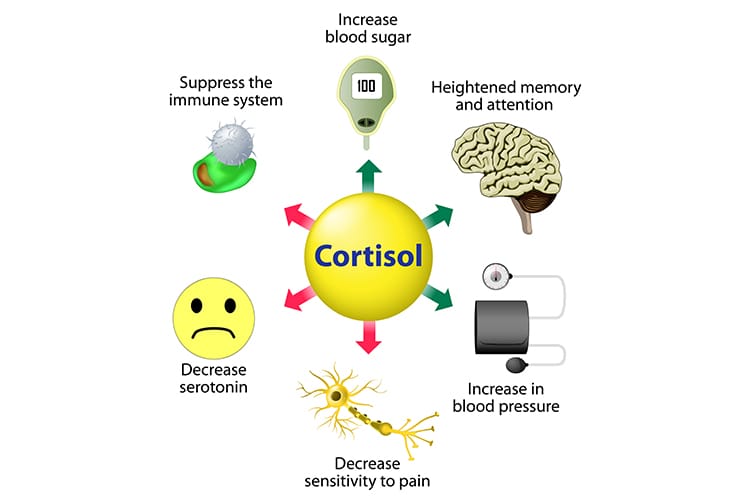
It's produced by your adrenal glands and released in response to perceived threat or demand. In short bursts, it's not just useful, it's essential. It sharpens focus, mobilizes energy, and helps your body respond to the moment in front of it.
The problem isn't cortisol. The problem is what happens when it never turns off.
The Modern Stress Trap
Your body's stress response was designed for acute, time-limited threats. A predator. A physical confrontation. A crisis that resolves.
What it was not designed for is a 7 am inbox full of problems, back-to-back meetings, financial pressure, relationship strain, poor sleep, and a phone that never stops demanding your attention… day after day, year after year.
The human nervous system doesn't distinguish between a physical threat and a psychological one. It responds to both the same way: cortisol up, adrenaline up, non-essential systems down.
When that response becomes your baseline, when your body is essentially living in low-grade fight-or-flight, cortisol stops being a helpful tool and starts being a metabolic wrecking ball.
What Chronic Cortisol Actually Does to Your Body
This is the part most stress conversations skip entirely. Let's not skip it.
1) It drives fat storage, especially around your midsection.
Cortisol directly stimulates fat storage, and it preferentially deposits that fat viscerally… around your organs, deep in your abdomen.
Visceral fat is metabolically active in the worst possible way. It produces inflammatory compounds, disrupts hormonal signaling, and is one of the strongest predictors of cardiometabolic disease we have.
2) It creates and accelerates insulin resistance.
Cortisol raises blood glucose, which is part of its job in an acute stress response, flooding your system with quick energy.
But when it's doing that chronically, your cells become desensitized to insulin over time.
The result is the same metabolic dysfunction we talked about in a previous edition: energy crashes, cravings, weight that won't move, and a slow march toward type 2 diabetes that most people don't see coming.
3) It dismantles your hormonal architecture.
Cortisol and your sex hormones (testosterone, estrogen, progesterone) are all produced from the same precursor: pregnenolone.
When cortisol demand is chronically high, your body diverts that precursor toward cortisol production at the expense of everything else. Low testosterone in men. Estrogen and progesterone imbalances in women.
Diminished libido, poor recovery, mood dysregulation, and accelerated aging. All downstream of chronic stress that nobody measured or addressed.
4) It degrades cognitive function.
The hippocampus, the brain region most responsible for memory and learning, is particularly vulnerable to cortisol.
Chronic exposure literally shrinks it over time. The brain fog, the word retrieval issues, the sense that you're not as sharp as you used to be? That's not aging. In many cases, that's cortisol and it's addressable.
5) It wrecks sleep quality.
Cortisol and melatonin operate on opposing rhythms. Cortisol should be highest in the morning and taper throughout the day, with melatonin rising in the evening.
When cortisol stays elevated (especially at night), melatonin can't do its job. You lie awake. You wake at 3am with a racing mind. You sleep eight hours and wake up exhausted.
And then, because poor sleep raises cortisol the next day, the cycle compounds on itself.
Why Standard Care Misses It
Here's where it gets frustrating…
A basic cortisol test (if it gets ordered at all) is typically a single morning blood draw.
That gives you a snapshot of one data point at one moment in time. It tells you almost nothing about your cortisol rhythm across the day.
What actually matters is the diurnal cortisol pattern… how your cortisol rises, peaks, and falls across a full day.
A four-point saliva or urine test taken at morning, midday, afternoon, and evening reveals patterns that a single blood draw will completely miss: blunted morning peaks, elevated evening levels, dysregulated rhythms that explain exactly why someone feels wired but tired, can't lose weight despite trying, or can't sleep despite being exhausted.
That test exists. It's not exotic. It's just not standard because standard care isn't built around finding this kind of thing.
What Addressing It Actually Looks Like
Managing chronic cortisol isn't about meditating more or taking a vacation, though both have their place.
At the clinical level, addressing cortisol dysregulation properly involves:
Measuring the full diurnal pattern, not a single data point
Identifying the downstream effects, insulin sensitivity, hormonal balance, inflammatory markers, and sleep architecture
Building a protocol that addresses root causes, not just symptom management
Ongoing monitoring because cortisol patterns shift, and your protocol should shift with them
This is exactly the kind of whole-system thinking that Kora MD was built around.
Stress is not a personal failing or a mindset problem. It's a physiological state that leaves measurable evidence in your blood, your hormones, and your metabolism, and it deserves a clinical response, not a wellness platitude.
The Question Worth Asking Yourself
If you've been running hard for years, building something, managing something, holding something together, and you've noticed your body quietly changing in ways that don't make sense given how hard you're trying:
The weight that won't move. The energy that isn't there. The sleep that doesn't restore. The sharpness that's gone a little soft.
Cortisol is worth putting on your list of suspects.
Not as an excuse. As an explanation and a starting point.
Kora MD launches April 15th. If what I've described here sounds like your reality, I'd encourage you to be among the first through the door.
Quick Question For You:
Have you ever tried peptides? |
More coming soon,

Austin L. Wright

Join my inner circle - Follow me on X for daily business breakdowns, lifestyle hacks, and a behind-the-scenes look at what my team and I are building.
Follow me on IG to see how I’m living the blueprint. I practice what I preach.
P.S.
We’re always looking to improve and create better newsletters for you in the future. If you have any feedback or suggestions for future editions, I’d love to hear from you! Just reply directly to this email and give me some ideas for how you think we could make it better!
If you’re reading this online, make sure you subscribe using the button below:
Disclaimer: The ideas shared in this newsletter are those of the author, and this is in no way intended to be medical, legal, or financial advice. Always do your own research and consult with licensed professionals.
Reply